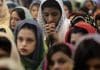
in Mosul, Iraq Saturday, April 23, as Christians and other minorities anxiously awaited the outcome of talks on a multi ethnic government to rule the increasingly volatile nation. AP identified the victim as Associated Press Television News cameraman Saleh Ibrahim and said photographer Mohamed Ibrahim, who had no relation to the deceased, was injured. Saleh Ibrahim was in his early 30s and was a father of five, AP said.
They were reportedly hit during a gunfight between insurgents and security forces, including US troops, that erupted after a car bomb explosion in the town of Mosul, about 390 km (240 miles) north of Baghdad, the agency added. Mosul, which replaced the Biblical Nineveh, has also seen violence directed against Christians, human rights groups said.
"We are grief-stricken at the news of Saleh Ibrahim’s death," said AP President and CEO Tom Curley. "His fervent dedication to reporting the complete story of Iraq at this historic moment inspired all who knew and worked with him. Our deepest sympathy goes to his family."
"TRAGIC HAPPENING"
Curley stressed AP would "fully investigate this tragic happening so we can understand the
circumstances under which it occurred." Ibrahim was believed to be the 28th journalist killed while on an assignment for AP, since the organization was founded in 1848.
In addition, Ismail Taher Mohsin, an Iraqi driver who worked for the AP, was ambushed by gunmen and killed near his home in Baghdad last September 2. The reasons for the slaying have never become clear, the news agency said.
It came as a series of explosions and insurgent attacks across Iraq left more than 12 people
dead Saturday and injured dozens more. However the U.S. military in Iraq had a small victory when it announced the arrests of six men suspected in the Thursday downing of a civilian helicopter.
ELEVEN KILLED
The helicopter crash killed six American employees of a civilian security company and two security guards from Fiji. Two members of the Bulgarian flight crew were killed instantly. A third member survived the crash, but was executed by insurgents who were videotaping the wreckage.
Yet it did little to increase a sense of security among Iraq’s monitory Christians and other religious groups who say they feel left out in negotiations about a government which they hope could eventually ease tensions and end Islamic violence directed against them.
"The people from minorities who have been neglected after the [30 January] elections are some of the oldest residents in Iraq," Santa Mikhail, a member of the Assyrian Women’s Union (AWU), told the United Nations Integrated Regional Information Networks (IRIN).
CLEAR VISION
"We [Christians] want to have a clear vision through the media and through the people who believe in our rights as Iraqi citizens and [we want] civil society foundations that care about minority rights," IRIN quoted al-Azawi as saying.
Christians, many of whom are of Assyrian descent, comprise roughly 3 percent of Iraq’s population, according to current estimates. Several organizations representing religious minorities have set up a committee which will liaise with the new government to ensure that their rights are genuinely protected under the new constitution, IRIN said.
“Promises of participating in the new government were given from the bigger parties like the Shi’ite Iraqi Alliance, but nothing has been done so far and we are afraid that we will lose our rights when they write the constitution," a member of the Mandaean Democracy Congregation (MDC), working to protect the rights of the Mandaean community, Sameea Dawood Salman, told the news service.
"INTENSE TALKS"
Reuters news agency quoted political sources as saying that "intense talks" were focusing on drawing the minority Sunni Muslims, Iraq’s dominant sect under ousted dictator Saddam Hussein, into the government with majority Shi’ite Muslims and Kurds.
"It needs to truly be a government of national unity, with all parties involved, not just a Shi’ite-Kurdish government," one source close to the negotiations was quoted as saying. Despite the surge in violence and political troubles United States President George W. Bush vowed to stay the course in his weekly radio address.
"Today, more than 150,000 Iraqi security forces have been trained and equipped, and for the first time, the Iraqi army, police, and security forces outnumber U.S. forces in Iraq," president Bush said. "Like free people everywhere, Iraqis want to be defended and led by their own countrymen. We will help them achieve this objective, and then our troops will come home with the honor they have earned."
Meanwhile, the US Army cleared four top officers, including Lieutenant General Ricardo Sanchez, the former top American commander in Iraq, of any wrongdoing in the Abu Ghraib prisoner abuse scandal. Iraqi detainees at Abu Ghraib were physically abused and sexually humiliated by military police and intelligence soldiers in the fall of 2003. Photos of some of the abuse caused worldwide condemnation when they were leaked to the media in early 2004. (With reports from Washington, Mosul and Baghdad and BosNewsLife Research).